Scale / viewing distance
Viewing Distance
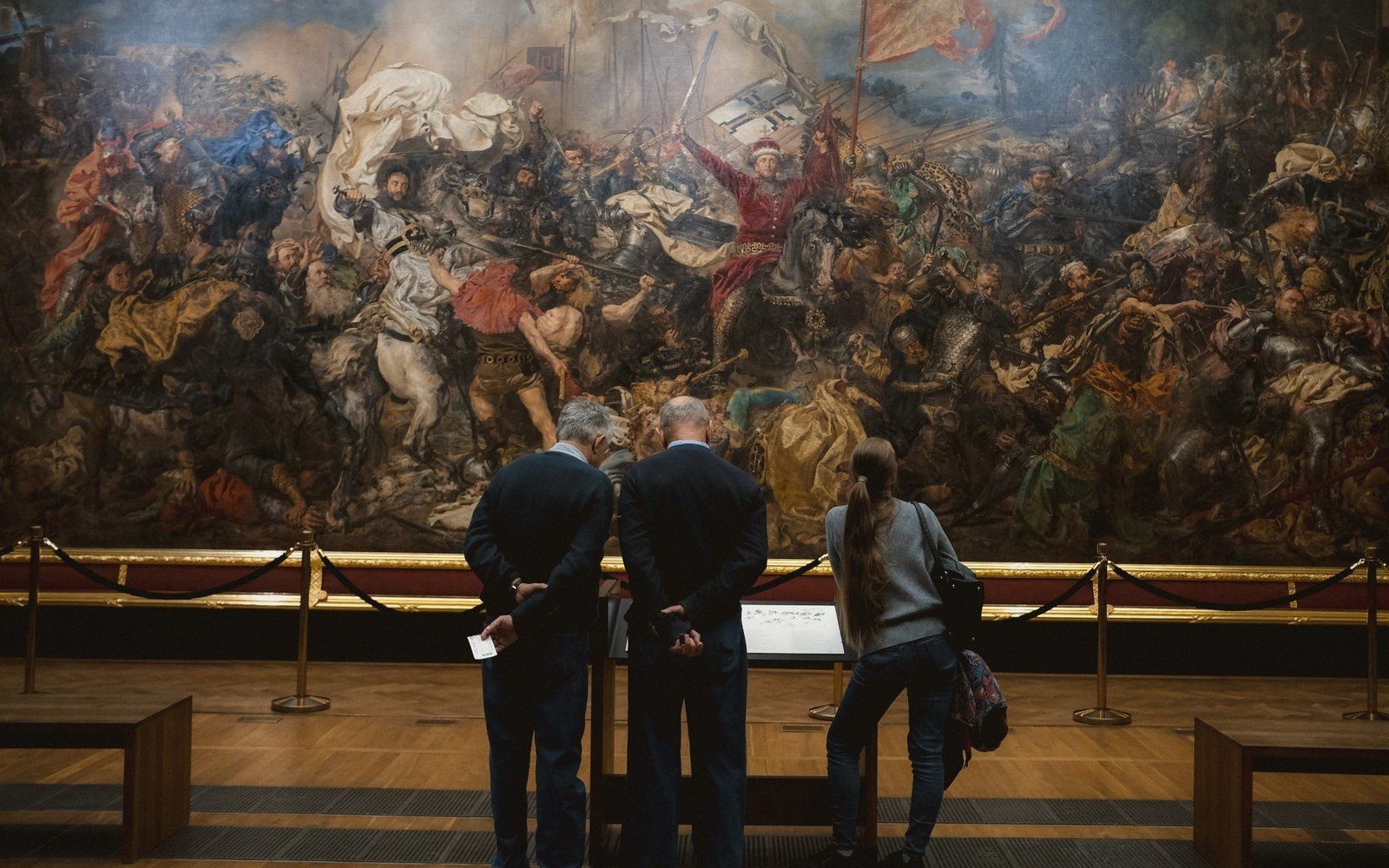
A large work has a distance at which it resolves. Galleries do not always give you room to stand there.
In this entry
The Physics of Looking
Every work has an optimal viewing distance — not a preference, a structural fact. The eye subtends roughly one degree of arc per detail it resolves comfortably, which means that for a painting two metres wide, the viewer needs to stand far enough back that the whole field sits comfortably within the central part of their vision, several metres away rather than at arm's length. Stand too close and the work becomes a sequence of passages; the composition never coheres. Stand too far and surface incident — brushwork, impasto, the texture that distinguishes the original from any reproduction — collapses into flatness. Both distances are failures, and the room is responsible for both.
For large-scale canvases — works of two metres and above in their longer dimension — that resolving distance tends to fall somewhere between three and five metres, depending on the internal complexity of the composition and how much of the reading relies on fine surface incident versus overall tonal structure. Mark Rothko understood this explicitly: his large paintings were intended for proximity, to surround the viewer's field of vision rather than to be surveyed from a distance. The Rothko Chapel in Houston was designed around this, the canvases scaled and the room dimensioned together, so that the relationship between body and surface was architectural. That is the exception. In most galleries, the distance available to a viewer is an accident of how the floor plan turned out.
What Goes Wrong
The most common failure is the gallery that hangs a large work on the end wall of a room that is simply not long enough. The viewer, unable to back up, is forced into a reading position that the work was never designed for. Worse, the work may be hung in a room where other works occupy the opposite wall, compressing the available retreat distance to a metre or less. The painting's tonal relationships — which depend on simultaneous contrast across the full field — never register.
A subtler version of the same problem occurs with works whose scale was established in a studio rather than an institutional space. Many large paintings made in high-ceilinged working studios, where the artist typically stood three to six metres back, reach galleries where the ceiling height prevents the work from being hung at a distance that reproduces anything close to the studio reading. The work is installed correctly by every standard measurement — centre height at roughly 1450mm, lighting at the correct angle — but the room simply does not permit the distance the work needs.
Scale also interacts with groupings. When large works are shown close together, the competition between them at close range is severe; a viewer trying to stand far enough back from one is involuntarily standing in the middle of another. Spacing between works calculated at normal room distances can still be too tight once you account for optimal viewing distance as a moving variable across the room.
What the Room Can Repair
The first move is the most obvious: know the resolving distance before the work enters the room. For very large paintings, this means treating the hang as a room problem before it is a wall problem — checking whether the floor plan actually permits a viewer to stand where the work becomes coherent. If it does not, the answer is usually to move the work to a room with a longer dimension, not to try and compensate through lighting or framing.
Where the room is fixed and shallow, deliberate placement can help. Hanging a large work in a corner or at an angle to a sightline from an adjacent room gives the viewer an approach that pre-builds distance before they enter the work's own space. Empty floor — the deliberate removal of seating or other objects from the direct viewing axis — adds recoverable retreat distance without any structural change.
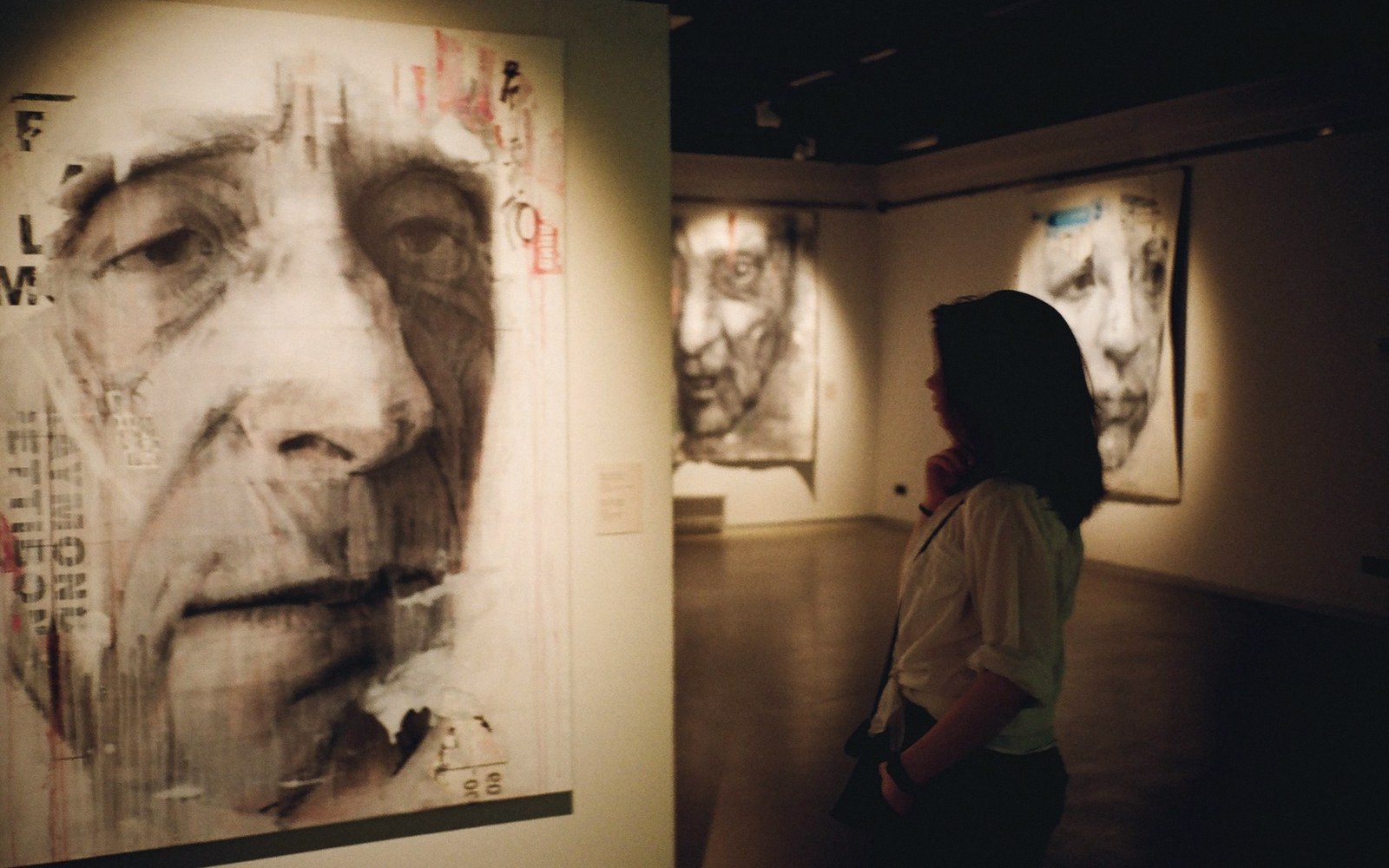
What the room cannot repair is the relationship between scale and surface when the distance is simply absent. No amount of light adjusts for the fact that a viewer standing at one metre cannot integrate a five-metre composition. That is a siting decision, and it belongs to whoever decides where the work goes.
Also in Scale