Scale / a hand span
What reproduction destroys
Every photograph of a painting is the same size — about a hand span — which removes the single most important fact about most of them.
In this entry
The flattening
Pick up any survey of twentieth-century painting and the works inside it share the same fate: a Rothko and a Bonnard appear at the same scale, which is the scale of the page. Both are reduced to something you can cover with your palm. The reproduction is accurate in colour (or tries to be), accurate in composition, accurate in every visible relationship — except the one that determines how the work actually operates on a human body standing in front of it.
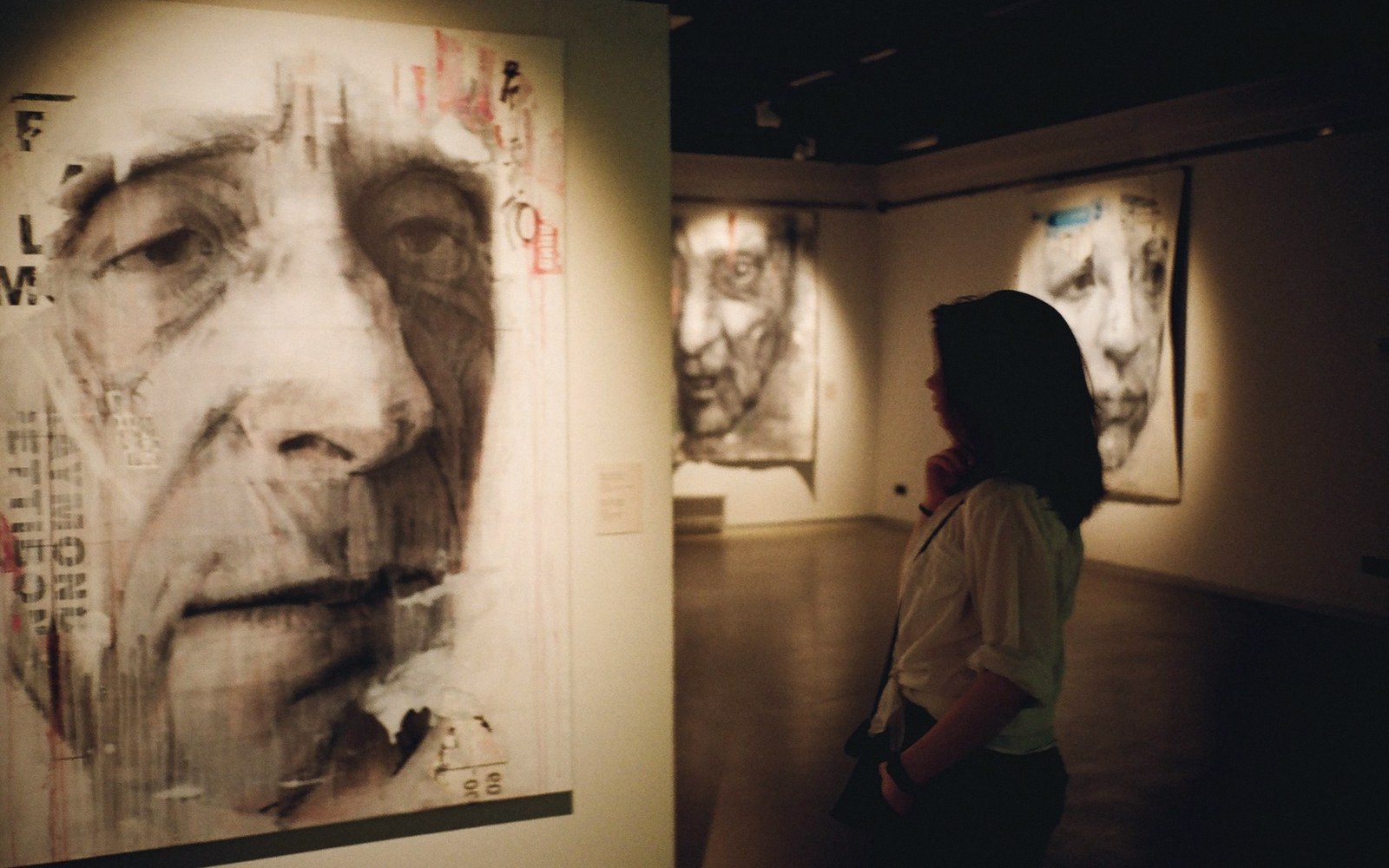
Scale is not a secondary property of a painting. For a great many works it is the primary one. The large canvases that emerged in American painting after the mid-twentieth century — works measuring two, three, sometimes four metres across — were made specifically to exceed peripheral vision, to refuse the kind of composed, distanced looking that a smaller picture invites. You cannot step back far enough to contain them comfortably; they surround you rather than face you. That is the point, and it is precisely what a printed page or a screen cannot convey. Viewing distance is a condition of the work, not a preference of the viewer.
The problem runs in both directions. Small works suffer equally but differently. A cabinet painting, a miniature, a small oil sketch — these are objects designed for closeness, for a particular quality of attention that proximity makes possible. Reduced to a thumbnail or inflated to fill a screen, they lose the intimacy that is their whole argument. They start to look like fragments of something larger, or worse, like demonstrations of technical skill rather than complete things.
What the body knows
The experience of scale is fundamentally proprioceptive — registered in the body before it is processed by the mind. A work that is taller than you are stands in a different relation to you than one you could hold. A canvas three metres wide asks your eyes to move; a canvas thirty centimetres wide asks them to settle. Neither of these requests can be transmitted by a photograph, because the photograph has already resolved the question silently, without telling you.
This is why first encounters with well-known works are so often disorienting. You arrive knowing the image — its composition, colour and surface — and find yourself wrong-footed by the sheer physical presence of the thing. You had built a mental model that was, in the most fundamental sense, incorrectly sized. The model was built from reproductions, and reproductions are all the same size.
The core variable
- Scale as proprioceptive factthe body registers it before the mind processes it
- Reproductions resolve scale silently: all photographs of paintings appear roughly the same size regardless of the original
- Works designed to exceed peripheral vision (very large canvases) and works designed for closeness (miniatures, cabinet paintings) suffer differently but equally
Museums have understood this for decades without always acting on it. Caption panels sometimes carry dimensions, and a reader who works in feet and inches or centimetres can reconstruct the arithmetic — but arithmetic is not experience. Knowing that a painting is 287 by 406 centimetres does not prepare the body for standing inside its field of attention. The number is a fact; the scale is an encounter.
What survives and what doesn't
Certain works travel well through reproduction because composition is genuinely their dominant variable. A drawing, a tightly constructed still life, a work where line and spatial logic carry most of the meaning — these survive the flattening better, though they still lose something. Works where scale, surface and the accumulation of paint are inseparable from meaning survive least well. The impasto that raking light turns into a landscape of its own, the surface that changes at two metres and again at fifty centimetres — none of this is in the photograph, which was taken at one distance and shows the thing at another.
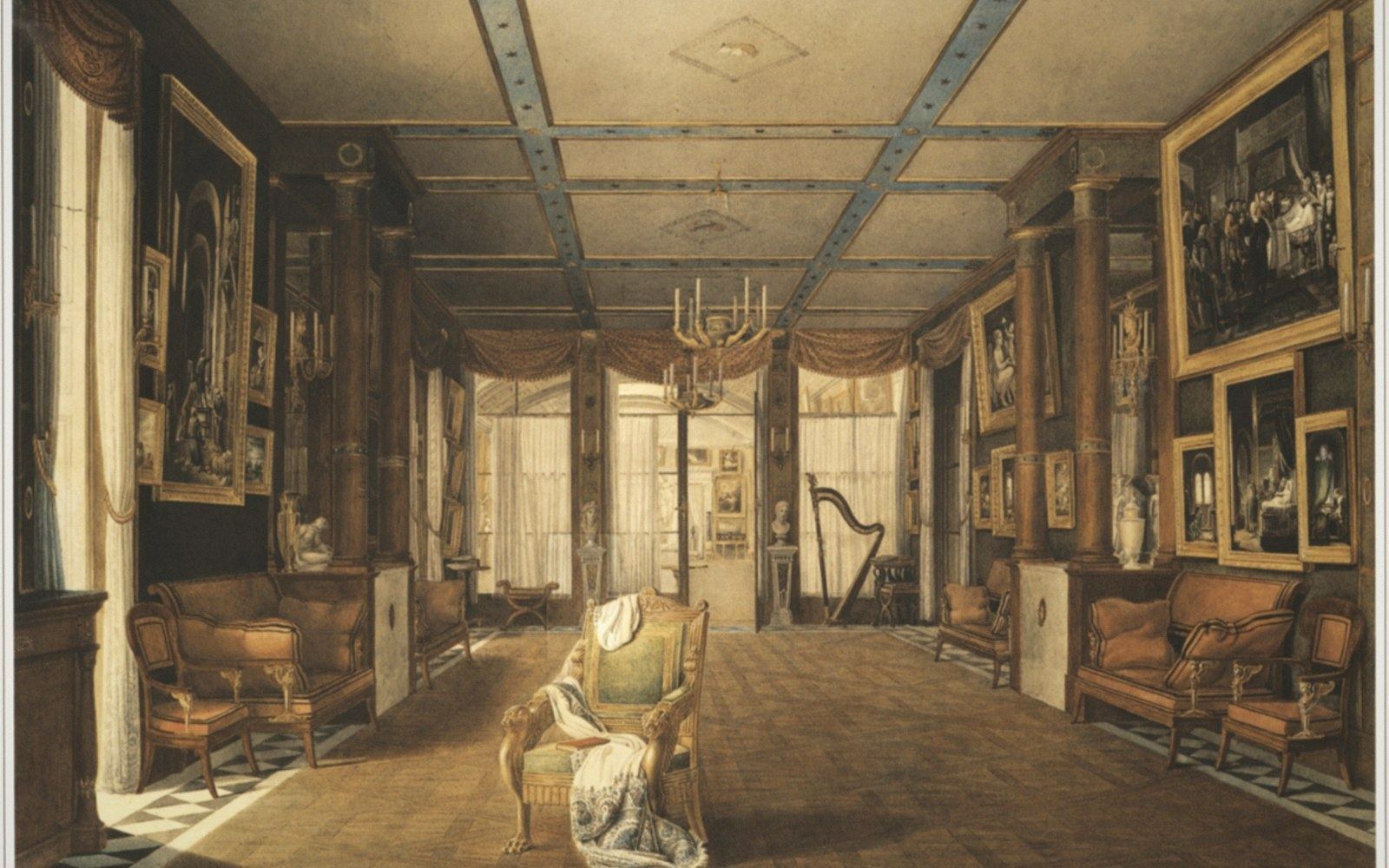
The practical consequence is real: a visitor who arrives at a work knowing only its reproduction has been, in a specific and measurable way, misinformed. Not deceived — no reproduction claims to be the thing itself — but deprived of the one fact that would have changed every subsequent judgment. The room corrects this immediately, and good hanging — correct eye level, adequate distance, no competing work too close — ensures the correction lands cleanly. What you see in the gallery is not a confirmation of the photograph. It is, if the hanging is right, its refutation.
What survives reproduction and what doesn't
- Survives relatively wellcomposition-dominant works: drawings, tightly structured still lifes, works where line carries the meaning
- Survives poorlyworks where scale, surface and paint accumulation are inseparable from meaning; heavy impasto; works that change character at different viewing distances
Also in Scale