Light / 30° from vertical
Beam angle and glare
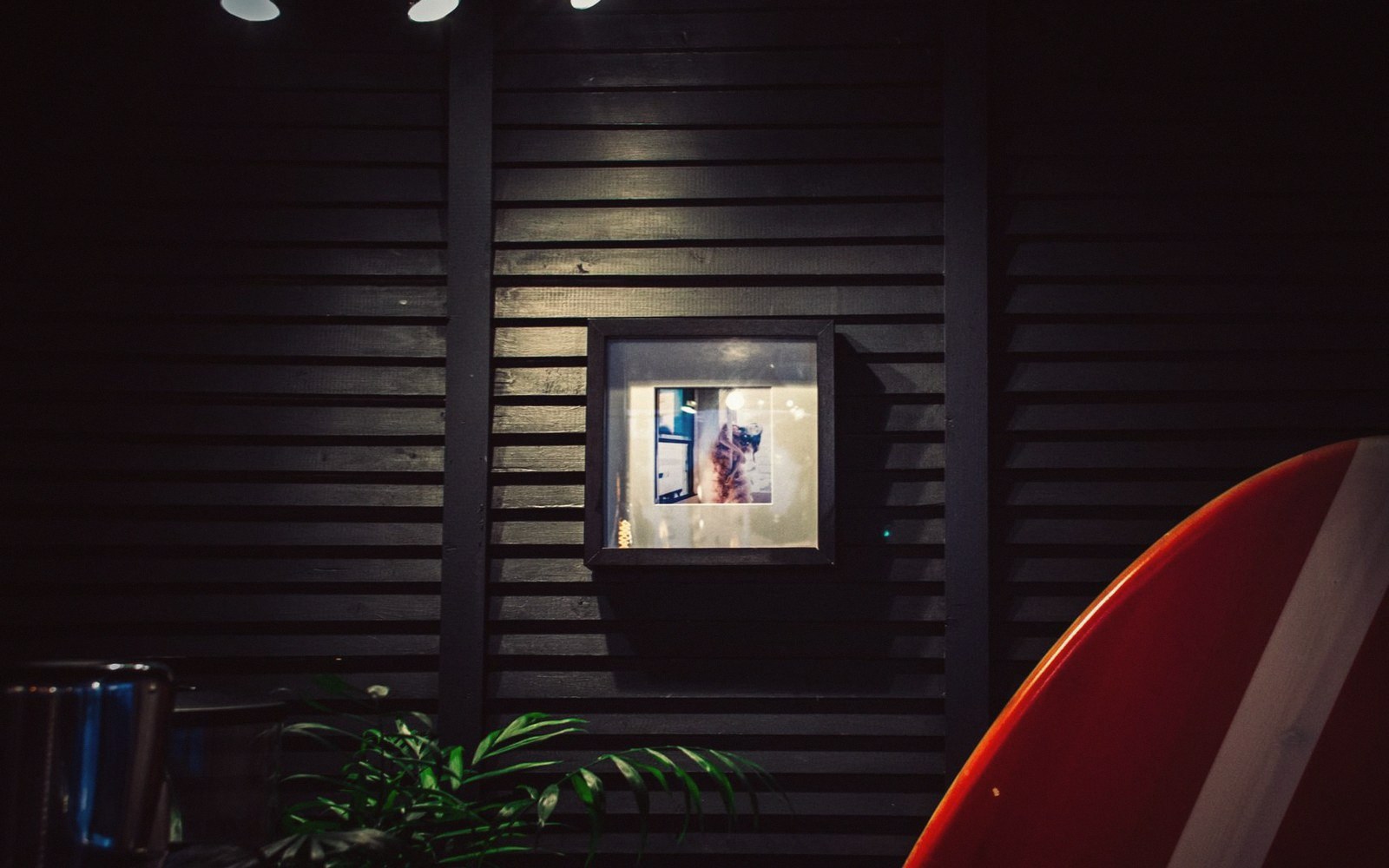
Tilt the track head five degrees too far and you're no longer lighting a painting — you're lighting the viewer's eyes.
In this entry
The geometry of the problem
A varnished oil or glazed work under glass behaves like a partial mirror. When a spotlight strikes it, the surface reflects that source at an angle equal to the angle of incidence — elementary optics, but routinely ignored in installation. If the track head is aimed too steeply toward the vertical, the reflected beam travels back toward anyone standing at normal viewing distance, which is roughly one and a half to two metres from the work. The viewer sees a hot spot, not a painting.
The working answer that lighting professionals and museum technicians have converged on is approximately thirty degrees from vertical — measured from the wall surface outward. At that angle, the reflected beam falls below the viewer's eye line, deflected down toward the floor rather than back into the face. The painting is lit; the viewer is not dazzled; the surface does what it's supposed to do, which is reveal the work rather than announce itself.
The figure isn't arbitrary. It assumes a standard track position — typically three hundred to six hundred millimetres out from the wall plane — and a centre-height convention that places the work's optical centre at around fourteen hundred to fifteen hundred millimetres from the floor. Change either variable and the arithmetic shifts. A track mounted unusually close to the wall requires a shallower angle; a larger work whose upper edge climbs above two metres may need the head re-aimed for the top half and the bottom half treated almost separately. The thirty-degree rule is the entry point, not the destination.
What beam angle actually controls
Beam angle describes the spread of the cone of light: the angle between the two points on either side of centre where intensity drops to half. A narrow beam — ten to fifteen degrees — concentrates light and suits small or densely hung works. A wider beam — thirty to forty degrees — washes more evenly across a larger canvas but spills onto the wall, which may be desirable or may compete with adjacent works depending on wall tone and spacing. Most picture-lighting situations use something in the fifteen-to-twenty-five degree range as a default, with wider floods reserved for large-format works.
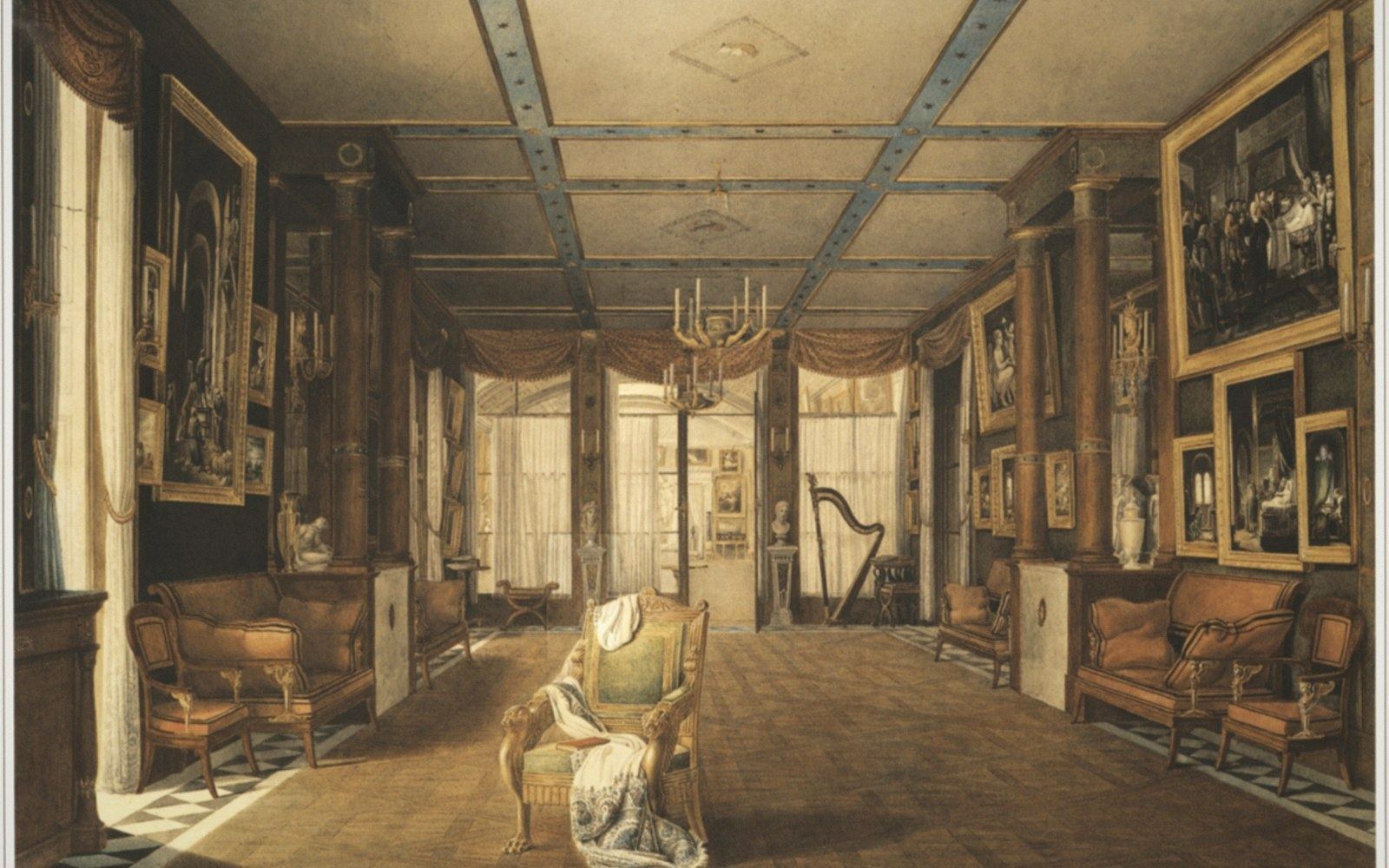
The combination of aim angle and beam angle determines coverage. Aim at thirty degrees from vertical with a fifteen-degree beam and you get a tight ellipse, harder at the edges and liable to leave the lower portion of a tall work in relative shadow. Open the beam to twenty-five degrees at the same aim angle and the coverage becomes more even, but the footprint widens and glare risk increases toward the edges of the cone. Neither setting is automatically correct; the technician adjusts both together, checking from standing viewing position each time.
Glare has a second source that beam angle alone cannot fix: glazing. Even a well-aimed spot will throw a secondary reflection if the glass is flat rather than anti-reflection coated, because the glass surface itself becomes a partial mirror. Museum-grade anti-reflection glass dramatically reduces this, but the geometry still matters — a badly aimed beam through AR glass will still produce a ghost. The glass reduces the problem; correct aim solves it.
Working it in practice
The practical method is straightforward: aim the head, stand at expected viewing distance, move your eye across the work at the height of the centre. If you see the source — even dimly — the angle is too steep. Tilt back toward the wall until the source disappears from that sightline. Then check from two or three metres back, and from slightly off-axis, where secondary reflections often hide. Track lighting allows fine angular adjustment; fixed downlights do not, and their position in the ceiling relative to the wall plane needs to be calculated before installation, not corrected after.
How the variables interact
- Track-to-wall distancemoving the track closer requires a shallower aim angle to maintain the same reflection geometry
- Beam angle (spread)typically 15–25° for picture lighting; wider beams improve coverage but increase spill and glare risk
- Work sizetall works may need the head re-aimed or a wider beam to cover the full surface without hot-spotting
- Glazing typeflat glass multiplies glare; anti-reflection coated glass reduces it but does not eliminate the need for correct aim
Also in Light