Hanging / the doorway
Sightlines
The view from the doorway is already a hang decision — whether anyone planned it that way or not.
In this entry
What you see before you move
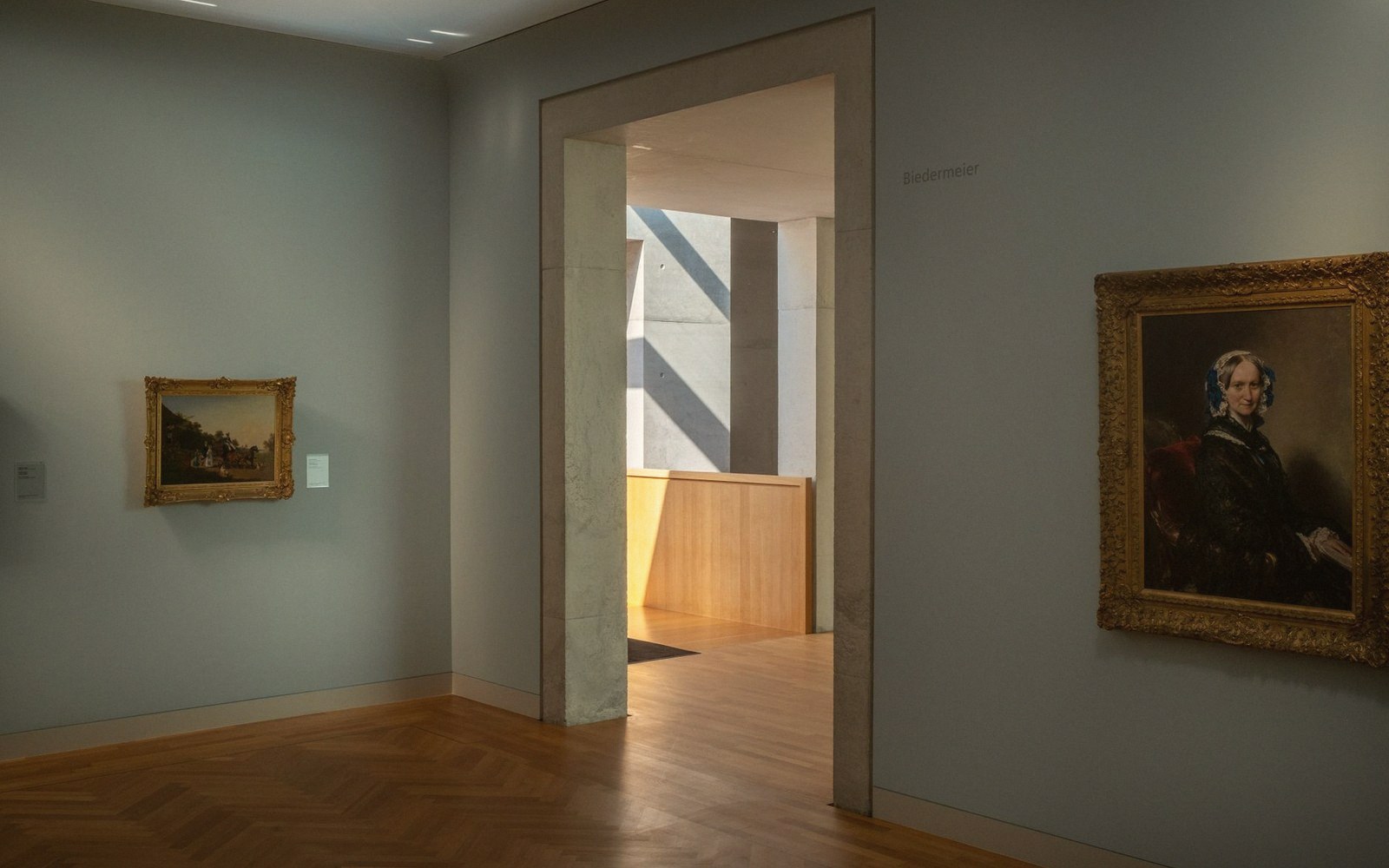
Before a visitor takes a step, the room has already given them something: a sightline. Whatever sits in that first axis — the work directly opposite the entry, the largest piece on the back wall, the gap or the cluster — becomes the organizing pole around which the rest of the experience arranges itself. People walk toward what they saw first, or they avoid it in favor of what appeared at the periphery. Either way, the doorway is doing curatorial work, silently.
The phenomenon is spatial in origin. When you enter a rectangular room through a door placed off-center in one of the shorter walls, the long axis stretches away from you. Your eye travels it automatically. A strong work at the far end of that axis anchors the whole room; remove it and the same space feels like it has no back wall. This is why the placement of the first work you see and the work you see from farthest away are related decisions, not independent ones. The first work sets the register; the sightline decides how far that register can carry.

The axis problem
Sightlines compound in rooms with multiple entries. An L-shaped gallery or a suite of rooms connected by wide openings means that several sightlines exist simultaneously. What reads well on the approach from the east door may argue with itself when seen diagonally from the northwest corner. Hanging technicians check this by standing at every opening, not just the primary entrance, and noting which works are visible from each. A piece that sits awkwardly low when seen close-up may look well-set from across the room, because sightlines and standing distances call for different centre heights and the compromise, when the room is asymmetric, is never clean.
Height is part of it. The standard hanging convention places the centre of a work at roughly 1450mm — a calibrated approximation of eye level — but a work seen from fifteen metres down a corridor needs to read at that distance first. Something scaled for intimacy, or with detail that only resolves at arm's length, should not be placed at the terminus of a long sightline. Scale and viewing distance interact with the sightline: what you can see from there is not the same question as what you can understand when you arrive.
Spatial mechanics
- Sightlinethe unobstructed line of vision from a threshold to whatever the eye finds first
- Terminusthe work or object at the far end of a sightline that anchors the room
- Negative sightlinea deliberate interruption (screen, sculpture, partition) that withholds the full view and generates forward movement
- Centre height (approx. 1450mm)the conventional standard, calibrated to average eye level, but which may need adjusting for works intended to be read from a distance
Negative sightlines
The sightline problem is not always about placing something at the end of the axis. Sometimes the answer is to interrupt the line. A freestanding screen, a sculpture on a plinth, a deliberate hang that bends the route — these create what might be called a negative sightline: the view is blocked in order to generate curiosity, to slow the walk, to prevent the room from giving itself away at once. Dealers in the twentieth century used this extensively; the partial view from the doorway implied that there was more to discover, and the visitor moved accordingly.
Light interacts with sightlines in a way that is easy to underestimate. A varnished painting at the far end of a room may glare back from a ceiling track aimed slightly forward of the work, which means the sightline terminates not in the image but in a hot spot. The painting effectively disappears from thirty feet. Getting the beam angle right on the anchor work — the piece that holds the sightline — is not optional; the whole approach is dead without it.
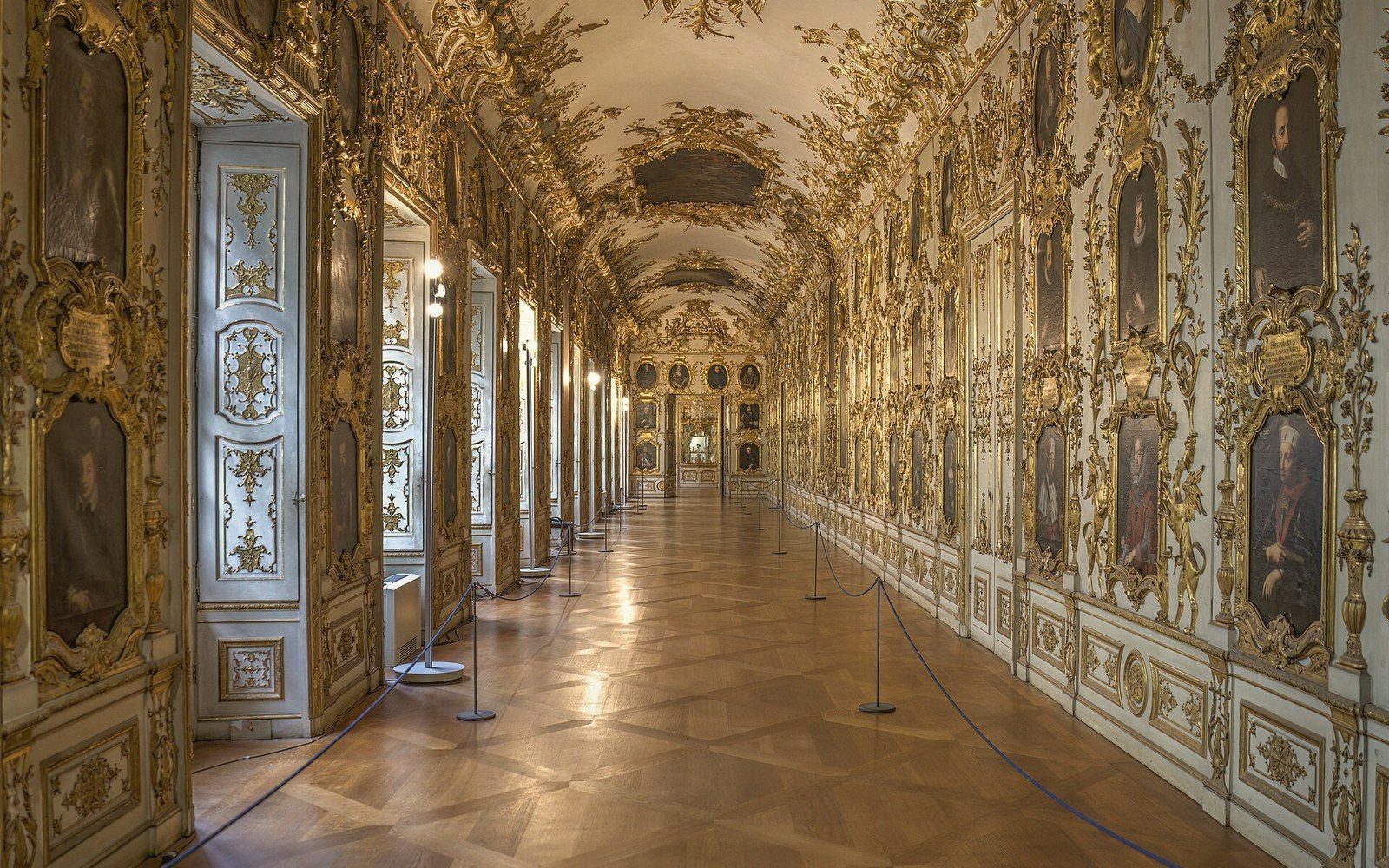
Planning sightlines means walking the room before anything is on the wall, standing at every entry and threshold, and noting where the eye goes without prompting. That involuntary movement is data. The hang can confirm it, redirect it, or use it as a foil — but it cannot ignore it.
Key relationships
- Doorway position → order of movement through a room
- Sightline terminus × beam angle → whether the anchor work reads or glares out at distance
- Scale of work × viewing distance × sightline length → whether detail is legible from the threshold
Also in Hanging