Hanging / five tiers
Salon walls
Floor-to-ceiling hanging is not clutter — it is a system, and it runs on a different logic from the single-tier hang.
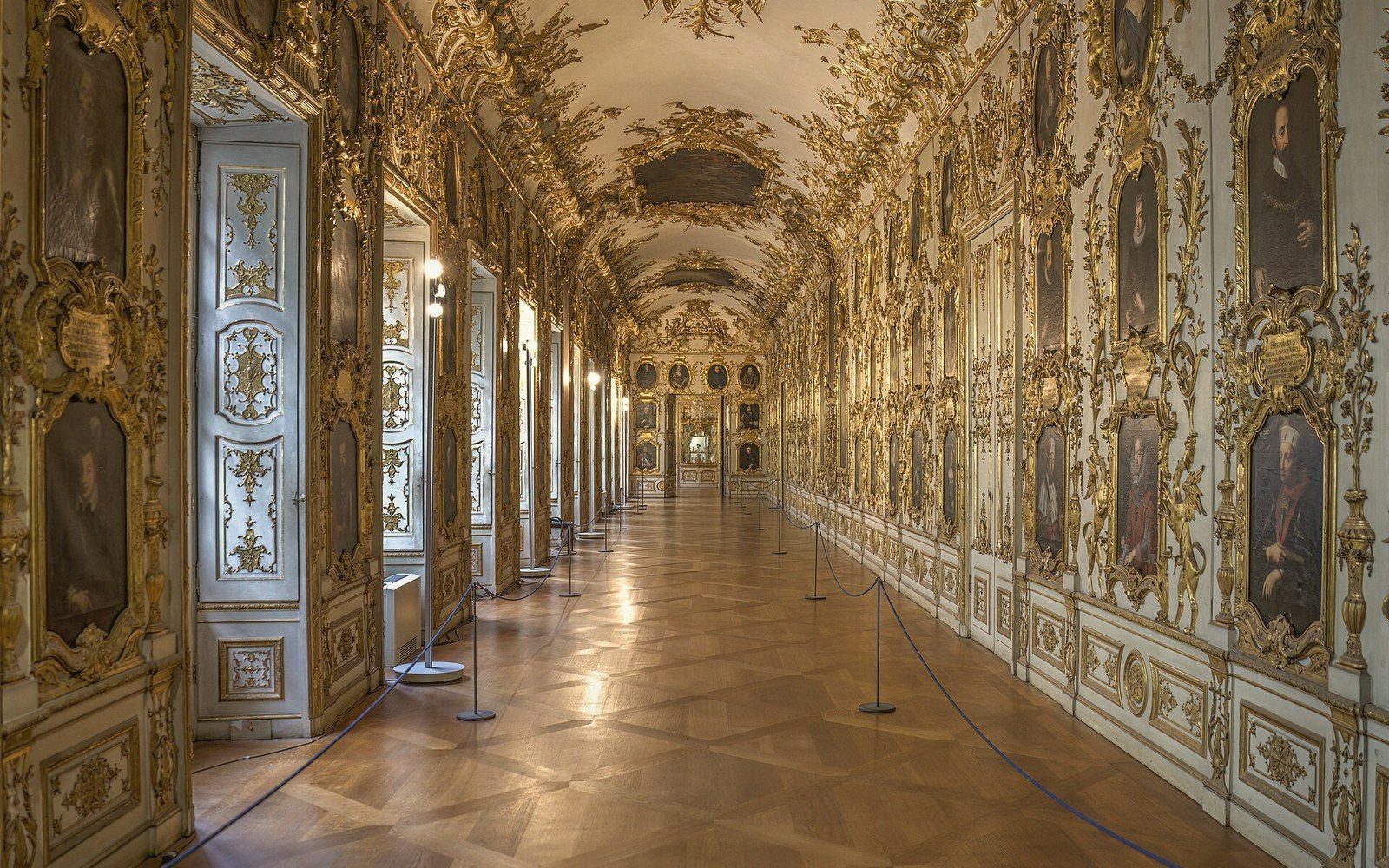
The logic of the stack
The salon hang takes its name from the Louvre's Salon Carré and the centuries of annual exhibitions staged there, where works were stacked from the dado rail to the cornice in as many as five tiers. What looks, to modern eyes, like visual chaos was in fact a hierarchy: the largest, most prestigious canvases went high — en hauteur — with smaller cabinet pictures and portraits filling the lower registers. The arrangement rewarded movement through the room and sustained looking at multiple heights.
That internal logic is what separates a salon wall from a wall that has simply run out of breathing room. When the system works, each tier relates to the others — in scale, in tone, in the weight of the frames — and the eye travels vertically as willingly as it travels horizontally. When it fails, it is usually because someone has tried to hang a salon wall while still thinking in single-tier terms: one row of large pictures, then a second row of whatever is left over.
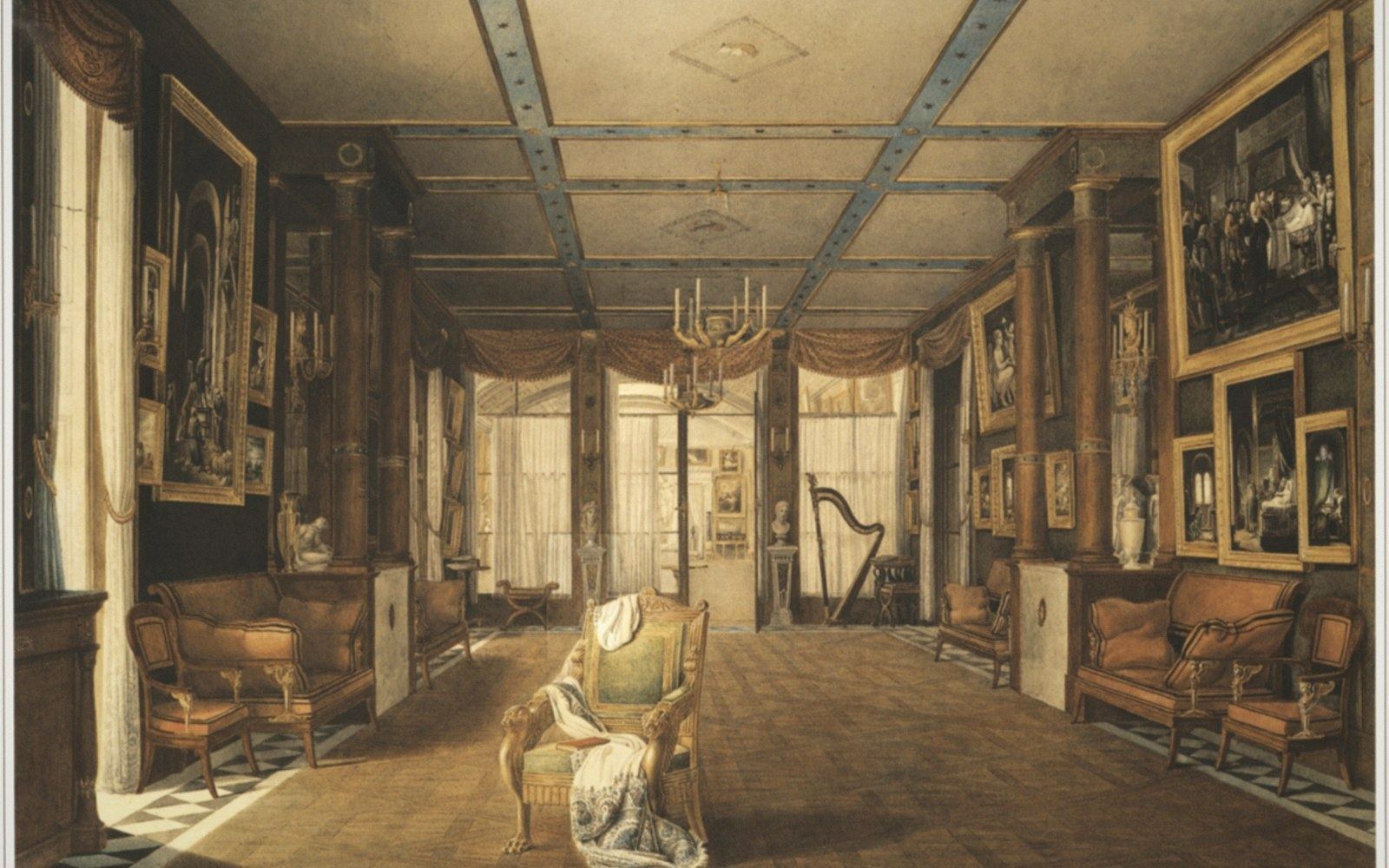
The organizing spine of a well-built salon hang is typically a strong horizontal axis — often close to the conventional centre-height of around 1450mm — from which larger works anchor the upper field and smaller works drop below. Everything else aligns to that invisible line: not the tops of the frames, not the bottoms, but the axis itself. Alignments can be vertical too, producing the grid-within-chaos that distinguishes a considered hang from an accumulation.

Spacing becomes compressed by necessity. Where a single-tier wall might carry 80 to 100mm of air between frames, a stacked wall often runs closer — sometimes as little as 30 to 50mm. That compression demands that the frames themselves carry the work of separation: mismatched mouldings fight; a consistent family of frames, or a deliberate contrast of one outlier against many, holds the wall together.
How the system works
- en hauteurFrench exhibition term for works hung high, above comfortable eye level; the conventional prestige tier in nineteenth-century salon exhibitions
- dado railthe horizontal moulding roughly 900mm from the floor that forms the lower boundary of the hanging field in period rooms
- organizing axisthe horizontal line, typically near 1450mm, from which tiers are measured up and down rather than hung independently
Lighting a salon hang is harder than lighting a single tier. A fixed track aimed at the mid-register leaves the upper works dim and the lower ones in their own frame-shadow. Floor-standing uplights or a diffuse ambient source often serve a stacked wall better than directional spots.
Also in Hanging