Scale / small scale
The Small Work
A small painting is not a large painting that failed to fill more space. It asks you closer, and what surrounds it either allows that or kills it.
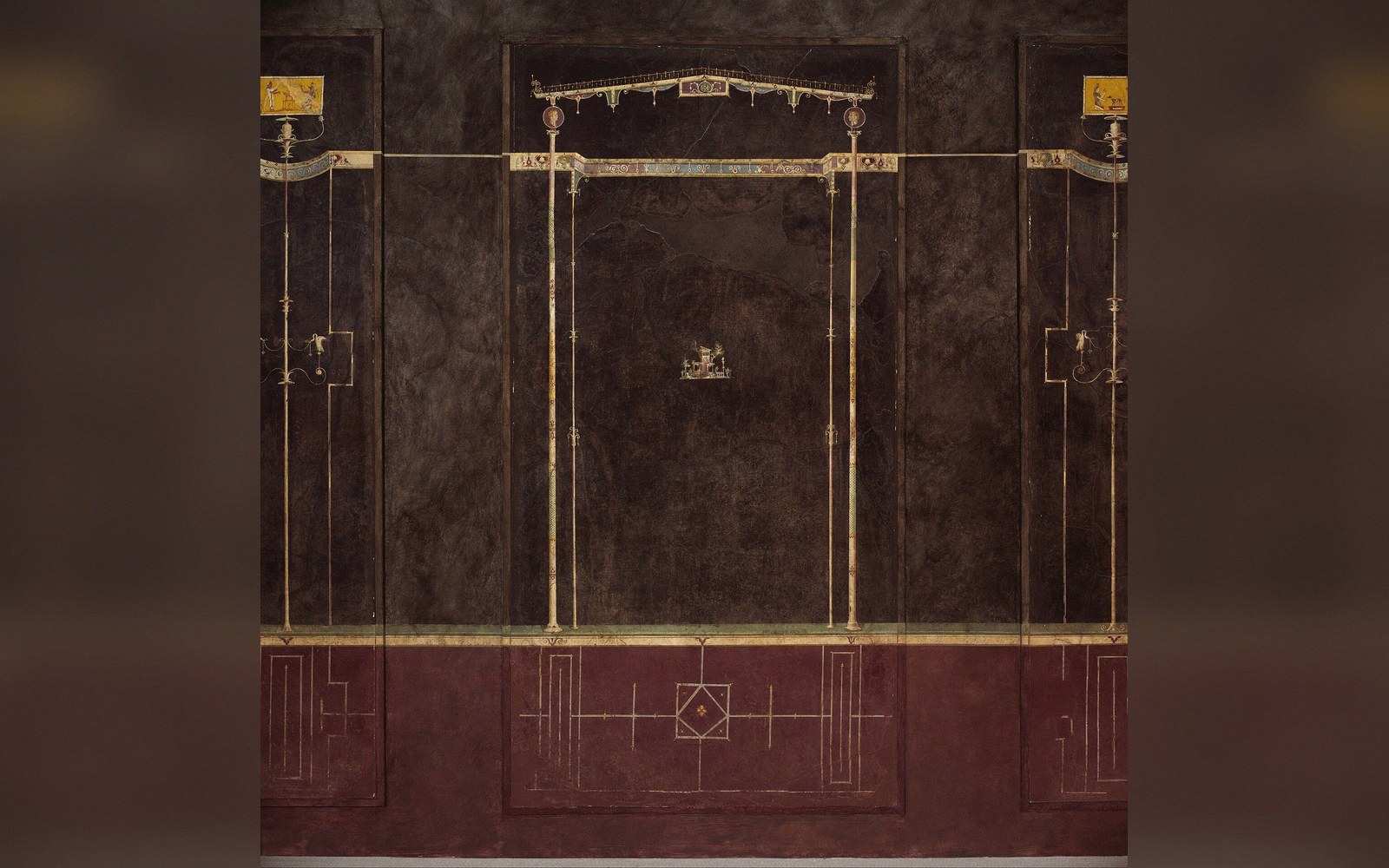
Intimacy is a condition, not a size
Scale is relational. A panel thirty centimetres wide can dominate a room if nothing else competes with it; the same panel on a wall of fifty works disappears into noise. What makes a small work feel small — in the productive sense, the intimate sense — is the conditions placed around it: enough wall to breathe, a viewing distance short enough to read brushwork, and a room quiet enough that approaching it feels like a choice rather than an accident.
The intimacy of a small work is a formal property, not a sentimental one. When you stand close to a cabinet painting by a seventeenth-century Dutch master, the handling reveals itself at a scale the eye could never read from two metres away. That transaction — face close to surface, detail opening — is the work's mechanism. A busy hang spaces works so tightly that you cannot stand in front of any single piece without a neighbour pulling at your peripheral vision. The mechanism never fires.
Hanging height compounds this. Eye level at 1450mm is a convention calibrated for standing adults looking at average-sized work. A small panel hung at that centre height sits with its lower edge around 1300mm, which is readable but not intimate. Lower it — centre at 1200mm or even 1100mm — and you shift the posture: the viewer inclines slightly forward, attention narrows, the world outside the frame recedes. The body's orientation changes the quality of looking.
Wall tone matters too. A luminous small work on a bright white wall is competing against its own surround; the eye keeps returning to the field rather than settling into the image. A darker, warmer tone closes the room around the work and reduces the visual noise the eye has to suppress.
Lighting a small work without producing glare at close range is genuinely difficult. Most track-mounted spots are aimed at a reading distance of one and a half to two metres; when a viewer steps to within half a metre, the geometry shifts and a varnished surface reflects the source directly back. The beam has to be calculated for the closer distance, which often means a tighter angle and a slightly lower mounting position than the same fixture would need for a larger canvas.
The room itself is the final variable. A small work in an overcrowded space is not seen — it is scanned. Isolation and quiet are not curatorial sentimentality; they are the technical conditions the work requires.
Also in Scale