Light / raking light
What light does to surface
The angle of illumination is not decoration — it is information. Change it, and you change what a painting is.
In this entry
The angle determines what you see
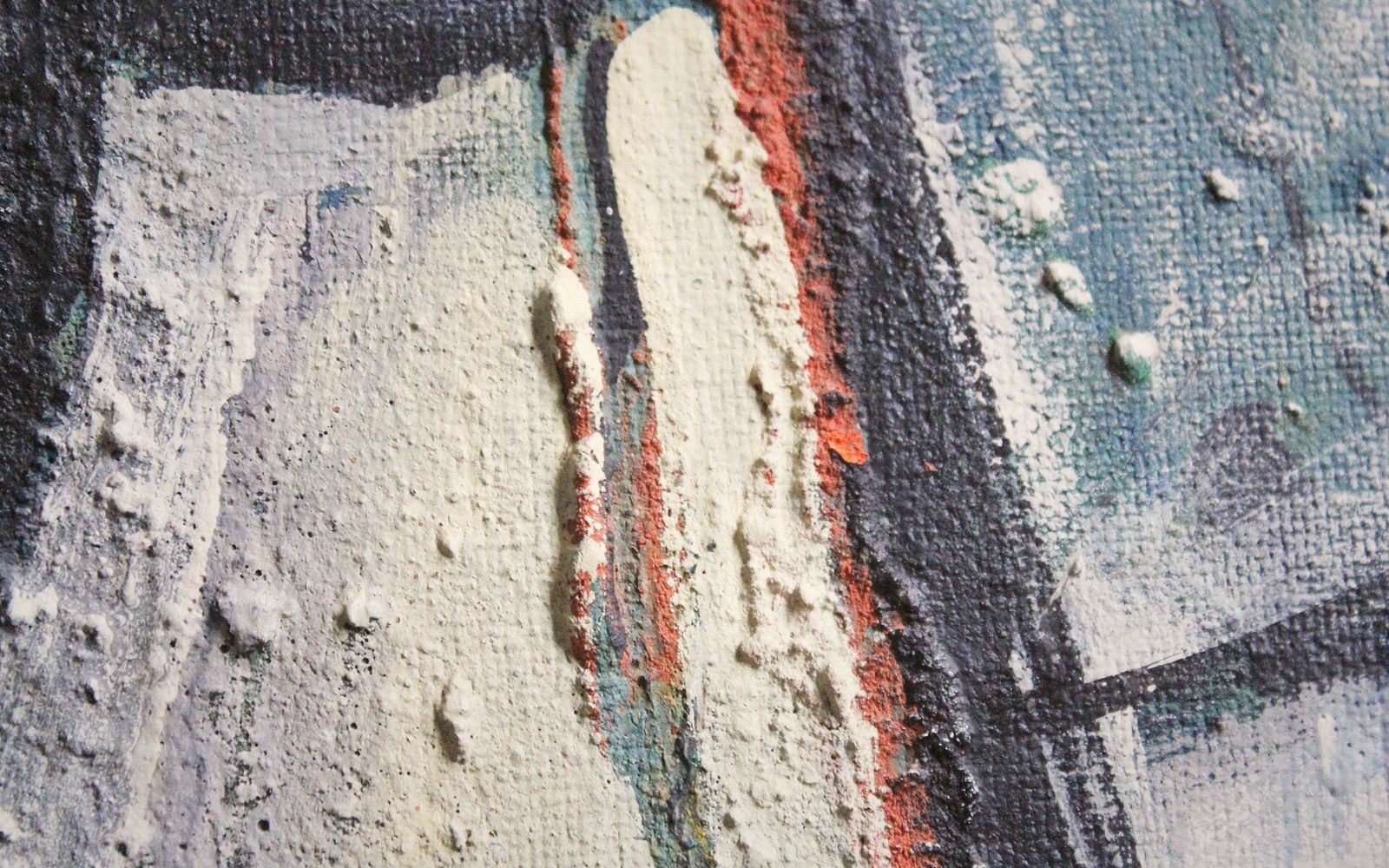
A painting has two surfaces in play simultaneously: the image carried in pigment and the physical object that carries it. A canvas with heavy impasto — say, a passage of lead white applied with a palette knife — is both a representation and a relief. Flat, frontal light treats it as the former only. The surface reads as colour, the ridges and valleys register nothing. Tip the source to a raking angle, and the topography becomes legible: every stroke casts a shadow, and you are suddenly reading the artist's hand as directly as a fingerprint.
This is not a small shift. The tactile record of making — the speed and pressure of a loaded brush, the drag of dry paint, the sharp edge where a knife lifted — is physically encoded in the surface relief. Frontal light suppresses all of it. What you see is closer to a high-quality reproduction than to the object itself, because what reproduction destroys is precisely this physical dimension: every photograph of a painting is already flat.
Conservators exploit raking light routinely, running a single tungsten source at a very low angle to surface to map underdrawing, old repairs, canvas distortions and restorer's overpaint. What they are reading is the same information a well-angled gallery luminaire communicates to a viewer without their knowing it — the physical history of the object, written in millimetres of relief.
What changes with the source
The variables are angle, hardness and distance. Each one shifts the surface reading differently, and they compound.
Angle is the bluntest tool. Standard gallery practice suspends luminaires on a ceiling track and angles them forward — roughly thirty degrees from vertical is a common starting position, enough to model a moderately worked surface without throwing the kind of drama that flattens the image into shadow. Push further toward horizontal and heavy impasto begins to look sculptural at the expense of the picture; pull back toward vertical and the surface flattens. The inflection point depends entirely on how worked the surface is. A smooth seventeenth-century panel by a Flemish master may need very little rake; a densely built oil from the mid-twentieth century may need more before texture registers at all.
Key variables
- Raking anglethe angle of the light source measured from vertical; higher means more rake, more surface modelling
- Frontal/flat lightsource close to perpendicular to the surface; suppresses relief, reads colour well
- Hard sourcenarrow beam, sharp shadows; reveals texture, can compete with the image
- Soft sourcewide or reflected beam; flatters colour, reduces micro-contrast at the surface
- Fill lightambient reflected light that softens the shadows raking light creates; affected by wall tone
Hardness is subtler. A narrow-beam source with a sharp cut-off throws crisp, defined shadows from every ridge. A wider, softer source — a large lamp, a reflector, or a wall sconce bouncing off a pale surface — diffuses the shadow and reduces micro-contrast. Soft light flatters colour, preserves gradients, reads well on smooth glazed surfaces. It suppresses texture. Hard light models relief but can produce harsh transitions that compete with the image rather than serving it. Most well-run rooms combine both: a general ambient wash and a directional accent, so that colour reads in the field and form reads at the surface.
Distance interacts with beam angle because a source far from the wall illuminates it at a steeper, more frontal effective angle than one close and directly overhead. Track systems that let a luminaire be pulled forward toward the picture plane give the installer real control; fixed ceiling points do not.
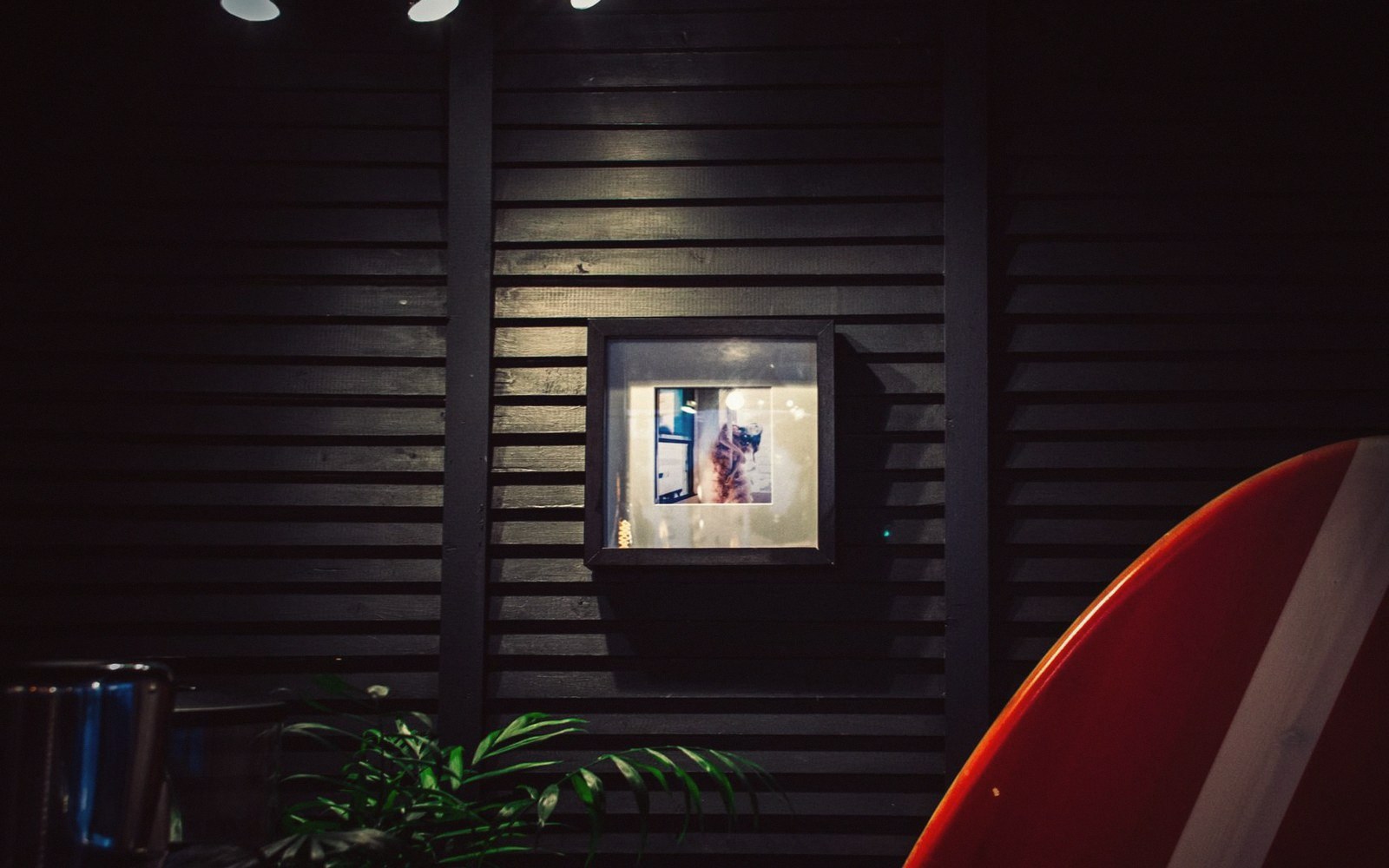
Glazed works add a further constraint. Beam angle and glare is a separate problem, but it is worth noting here that the raking angle which reveals surface in an unglazed oil can, on a glazed work, simply move the glare patch from the centre to the lower edge — trading one problem for another.
The room as light environment
A wall tone that reflects strongly — a bright white, a saturated colour — fills the shadows that raking light is trying to create, effectively softening whatever modelling the luminaire achieves. Matte, mid-toned walls absorb fill light and let directional shadows read. This is one of the practical reasons dark or neutral wall colours appear in rooms designed to show heavily worked surfaces: the room is not suppressing the luminaire's work.
What all of this amounts to is a simple principle with surprisingly wide consequences: light is not applied after the fact, as illumination. It is part of the argument the room is making about what the object is. Get the angle wrong and a painter's most deliberate physical mark — the thing that survives three hundred years and distinguishes an original from every copy — becomes invisible. The room has decided, silently, that it is not there.
Why it matters in practice
- Smooth glazed panels (e.g. seventeenth-century Flemish works)minimal rake needed; surface is near-flat
- Heavy impasto, loaded knife worksignificant rake required before texture registers at all
- Raking light on a glazed workcan shift glare from centre to edge rather than eliminating it
- Matte mid-toned wallsabsorb fill light; allow directional shadows to read without being filled in
Also in Light